top of page


The Snack Aisle Is Evidence-Based. Your Legacy Interviews Aren't: A Science-Based Interviewing Case Study
Grocery stores have spent fifty years using behavioral research to change how you shop — down to the scent of the bread and the height of the cereal. Meanwhile, the way we interview and investigate hasn't meaningfully changed since 1955. If a soda bottle can be upgraded with science, why not the interview?
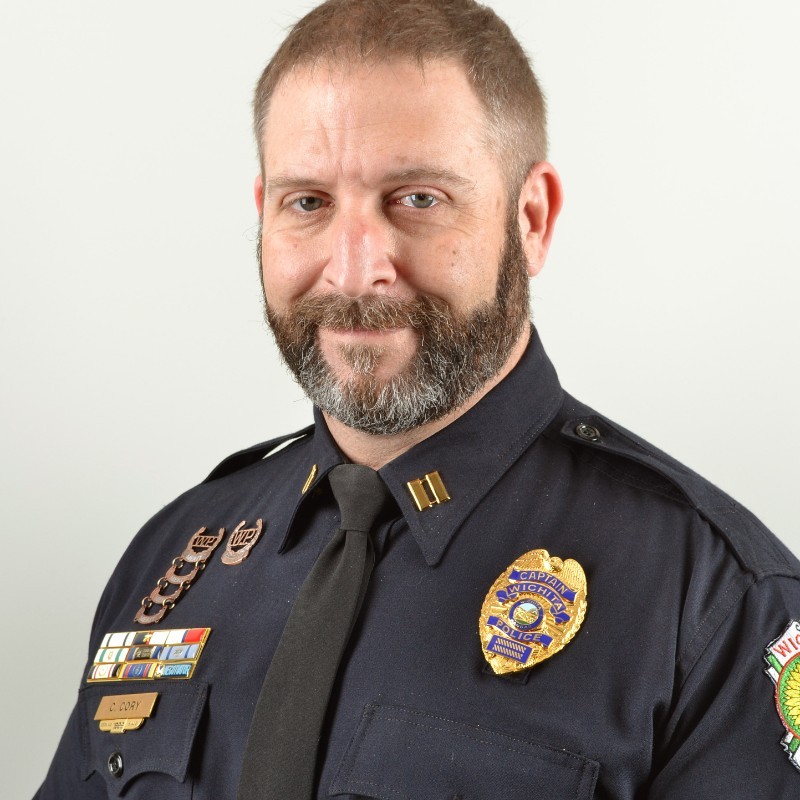
Christian Cory
Aug 16 min read


Lie Detection Training: You Can't Learn From Your Mistakes
You can't learn from your mistakes—because anxiety-based lie detection training never lets you count them. No batting average, no save rate, and no field goal percentage: it records only the hits. I trusted NLP, microexpressions, and baselining once, and they pointed me at an innocent man while the real evidence sat on a phone I'd turned off. Human deception detection runs about 54%—barely better than a coin flip. Here's why the science-based fundamentals beat the pseudoscien
Christian Cory
Jul 1212 min read


The Tenth Man in the Room: What Four Centuries of Red Teaming Teach Investigators and Leaders
Spies gather intelligence, but someone still has to decide—usually without certainty. From the Prussian war game to the Catholic Church's Devil's Advocate, Israel's "Tenth Man," and the red teams that stress-tested the bin Laden raid, history shows that the most dangerous moment in any investigation isn't when the file is thin and everyone's arguing. It's when the file feels complete and everyone agrees. Are you red teaming your case—or one unchallenged assumption from disast
Christian Cory
Jun 1818 min read


Active Listening Is Not What You Think It Is
Most active listening training teaches performance, not the real skill. After years in hostage negotiation and homicide investigations, I can tell you — nobody in those rooms cared whether I was nodding. What actually determines whether someone talks or shuts down has nothing to do with what any listening module ever taught. Here's what real active listening costs, why dismissing it as a soft skill is a dangerous mistake, and what it actually looks like when the stakes are hi

Christian Cory
May 89 min read


Science-Based Interviewing Versus The Burden of Bad Ideas
Science-Based Interviewing is not new, but the evidence supporting it is stronger than ever. While research consistently shows that information-gathering approaches outperform accusatory, confession-driven tactics, outdated interrogation methods continue to dominate training rooms. This article examines why legacy practices persist, the risks they create, and how evidence-based interviewing improves accuracy, cooperation, and investigative outcomes.
Christian Cory
Mar 112 min read


Science-Based Interviewing: What Taylor Swift and my Daughter Taught Me About Interrogation
What does trolling a teenager who loves Taylor Swift have to do with interrogation? More than you’d think. This article uses dad-level provocation, eye rolls, and pop-culture mischief to expose a serious problem in interviewing: tactics that rely on pressure, emotion, and reaction-hunting instead of listening. By contrasting accusatory methods with science-based interviewing, it shows why provoking people doesn’t produce truth—it produces noise.
Christian Cory
Jan 286 min read


Red Teaming in Action: Strengthening Investigative Thinking and Countering Confirmation Bias
Red teaming is a structured approach investigators use to challenge assumptions, counter confirmation bias, and strengthen investigative decision-making. Rather than reinforcing early conclusions, red teaming introduces disciplined skepticism, helping teams test working theories, evaluate evidence more critically, and explore alternative explanations. When applied intentionally, red teaming improves accuracy, reduces risk, and supports more defensible investigative outcomes.
Christian Cory
Aug 31, 20245 min read


The Ultimate Glossary of Interview and Interrogation Terms for Law Enforcement Professionals
Science-Based Interviewing (SBI) is an information-gathering approach to interview and interrogation based on peer-reviewed behavioral and cognitive science, including research funded through the FBI-administered High-Value Detainee Interrogation Group (HIG). SBI emphasizes accurate, reliable, and corroborated information through open-ended questioning, active listening, rapport, Strategic Use of Evidence, and cognitive interviewing.
Christian Cory
May 14, 202444 min read


False Confessions: A Look into What They Are and Their Historical Context
False confessions are not rare anomalies. They are predictable outcomes of coercive, accusatory interviewing and pseudoscientific lie-detection practices. This article examines the history, psychology, and risk factors behind false confessions and their role in wrongful convictions. It contrasts confession-driven interrogation with Science-Based Interviewing, an evidence-based approach that prioritizes reliable information, corroboration, and sound questioning to reduce inves

C. Edward
Sep 24, 20239 min read


Red Teaming Assumptions: "No one would ever confess to a crime they did not commit"
False confessions persist because flawed assumptions go unchallenged. This article uses red teaming to critically test the belief that innocent people never confess, exposing how coercive tactics, bias, and psychological vulnerability undermine investigations. Grounded in research and real-world cases, it shows how Science-Based Interviewing (SBI) and key assumption checks strengthen critical thinking, protect memory and decision-making, and produce more reliable, ethical inv
C. Edward
Aug 30, 20235 min read


When Confidence Becomes a Liability: Confirmation Bias and Science-Based Interviewing
Confirmation bias is predictable—but not unavoidable. Left unchecked, it distorts interviews, weakens investigations, and jeopardizes outcomes. Science-Based Interviewing (SBI) offers a practical path forward by using red teaming to challenge assumptions, test hypotheses, and counter confirmation bias and other cognitive errors. Through structured critical thinking, SBI strengthens objectivity, protects case integrity, and supports ethical, evidence-driven decision-making.
C. Edward
Aug 26, 20234 min read


Red Teaming: Strengthening Investigations Through Disciplined Critical Thinking
Red Teaming is critical thinking on purpose. It deliberately challenges assumptions, confidence, and early conclusions to strengthen investigations before decisions harden. While this may feel counterintuitive, it helps investigators check themselves and reduce bias before interviews, evidence interpretation, and case direction are shaped. When paired with science-based interviewing, Red Teaming improves information gathering, decision quality, and investigative integrity.
Christian Cory
Aug 21, 20234 min read
bottom of page